On Friday I was standing on a bridge south of Wuxi when a woman wielding this thing walked by:

I ran back to the car, grabbed my camera, and followed her down to the banks of the Grand Canal. I wasn’t sure that she wanted to be photographed, so I (very quietly) tried to take a picture without her notice. The one posted here is the second of two that I took before someone – a husband, perhaps? – yelled something that I didn’t understand, but probably could be translated as: “A foreigner is trying to take a photo of your rear-end.” She whipped around and glared at me; and, in that brief moment of eye contact, we both seemed to have a clear idea of what that nail-encrusted maraca could do to my face.Fortunately, though, the threat passed and she had better things to do — like using that device – which is actually a magnet-on-a-stick to pick up the rusty nails left behind by the wood recyclers who have set up shop along that stretch of the canal. I knew nothing about this industry or its existence in Wuxi, and so I spent half an hour wandering through the piles of pallets, broken packing crates, doors, window frames, and other wood waste that somehow makes its way to the water’s edge, and eventually back into Wuxi’s thriving manufacturing sector.
The largest of these operations is primarily focused on disassembling and reconditioning wood from pallets, such as these awaiting dis-assembly:
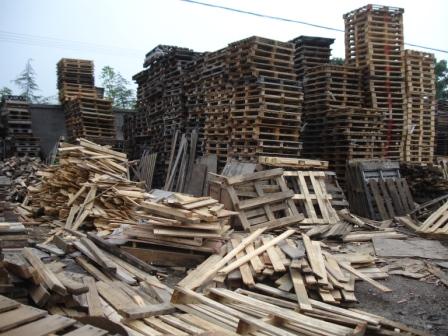
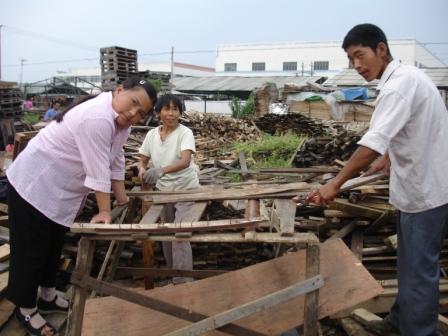
As in other Chinese recycling industries, manual processing of low-quality materials (such as lousy pallet wood) is the key to profitability. And, apparently, wood recycling is no exception. Here, workers disassemble crates, pulling nails (and saving them) and segregating wood by size.
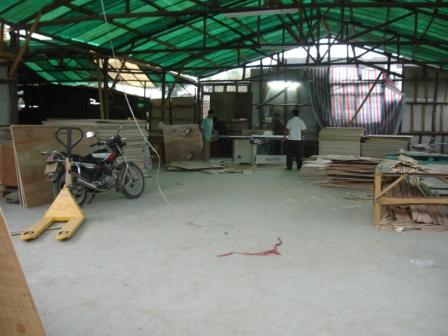
Eventually, the segregated wood is moved into a shop where it is sanded, and re-cut (as necessary). Though the manager of the wood yard was willing to let me wander and photograph dis-assembly, he stopped me when I approached the shop itself. All I was able to get was this photo of crate panels being re-sanded (not a great image). I was told that much of the crate wood had been shipped to Wuxi from Jianxi Province. If true, and I’m sure it is, those Jianxi crates are just one more example of how much value China’s recycling industry is capable of adding to items that others consider waste worthy of landfilling.
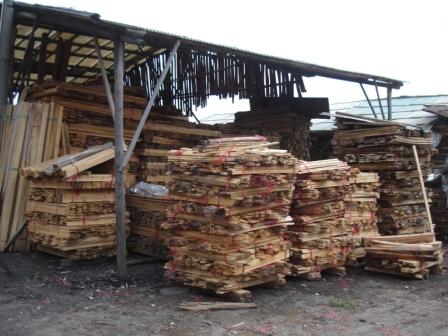
Ultimately, the reconditioned wood is packaged and displayed for sale to local merchants, most of whom are … pallet and box manufacturers in Wuxi.
That’s fascinating. That first picture of pallet and wood piles reminds me of my office sometimes.